
Emily Thrift is doing some beautiful work. She's looking at the microplastics in the natural world—including in hedgehogs and in hedgehog food—and by pulling on that thread she's illuminating the mess we've created.
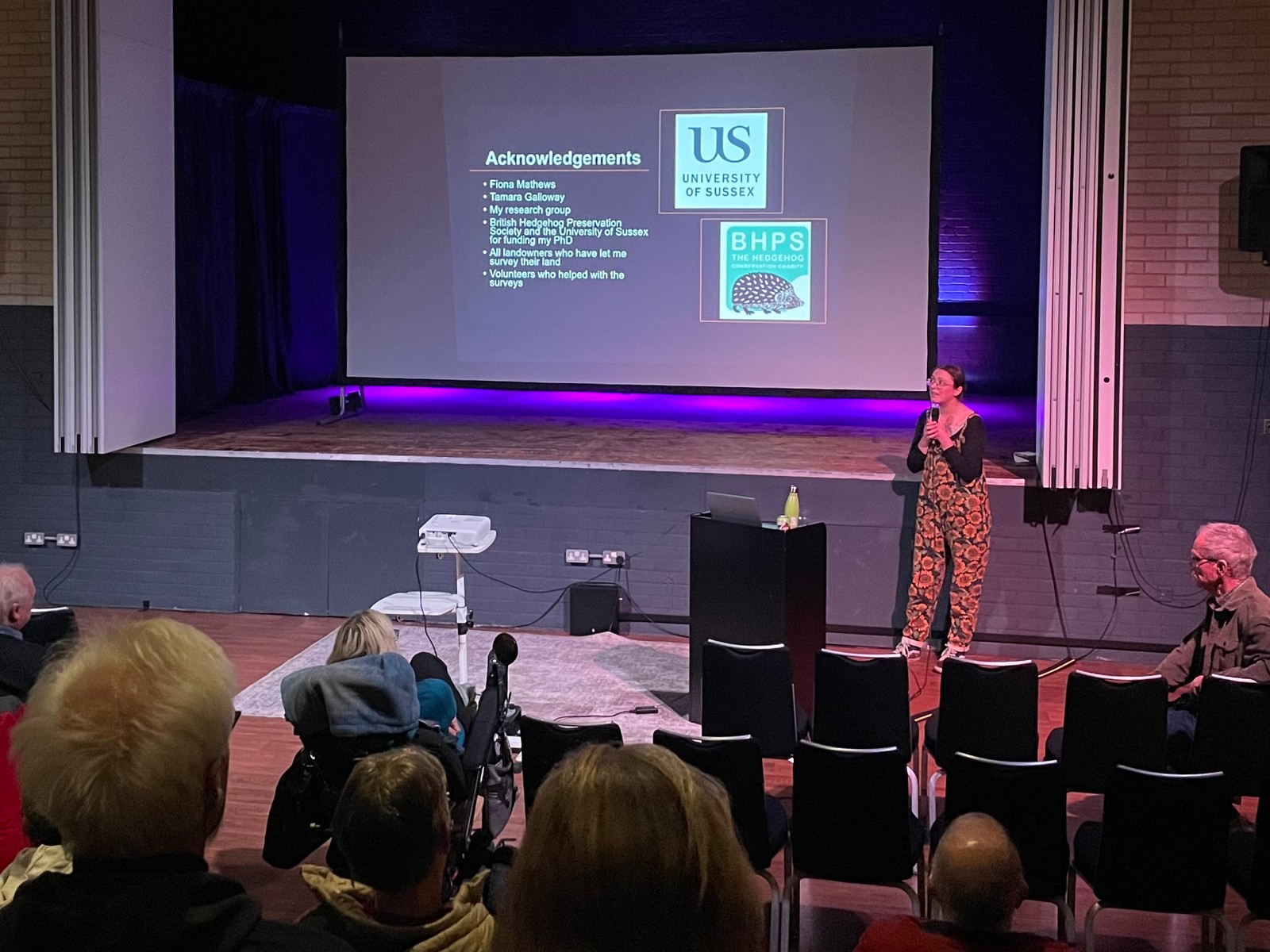
She spoke at Cafe Sci in Brighton and described how microplastics (MPs) are found in soil, water, plants, birds, mammals, and the things mammals eat. I'd have guessed that urban parks would be the worst, but they're not: it's the countryside. One idea is that it's due to the spraying of sewage, which includes wastewater from washing machines.
The scary part is that we have no idea what microplastics do to hedgehogs, or indeed to us. Research money isn't flowing into this, but there are suggestive results. For example, in a review relating to cancer: "the primary conclusion is that MPs within the TME [tumor microenvironment] markedly contribute to the proliferation and metastasis of tumor cells" (not directly from Emily Thrift's talk; that's from Oncology Letters, Feb 2025).
If you want to find out more, I found the following helpful and terrifying:
- Microplastics and our health: What the science says, Stanford Medicine (29 January 2025). A review of findings and some tips, such as not heating plastics containing food.
-
How do the microplastics in our bodies affect our health? BBC Future (25 July 2025). Notes that:
- results are expected from a human challenge trial (of eight people) eating microplastics; and
- reports on results from other work, such as: "scientists identified microplastics in the brains of human cadavers [...] those who had been diagnosed with dementia prior to their death had up to 10 times as much plastic in their brains compared to those without the condition."
- ...but it's too early to say (link added 20 January 2026).
As to what to do, there's Emily Thrift's article in The Conversation from May 2025:
If we want to protect ecosystems from plastic – on land as well as at sea – we need more than personal action. We need serious accountability, better waste management, and real investment in truly sustainable alternatives.
* * *
Update: Emily Thrift describes this work in The Conversation, 23 June 2026.