
I was 50:50 about going to this event last night on “how quantum physics could help decode human behaviour”. My worry was that it’d be total woo-woo and a waste of time. It was not that: it was about the curious findings that some human behaviour can be modelled by the maths of quantum physics.
There are some results in psychology that aren’t captured by standard statistics, apparently. “Quantum cognition” steps in to use quantum probability maths to model behaviour. A key example is “the conjunction fallacy”, where people tend to prefer more detailed explanations (fact A and hunch B) over the more likely (just fact A).
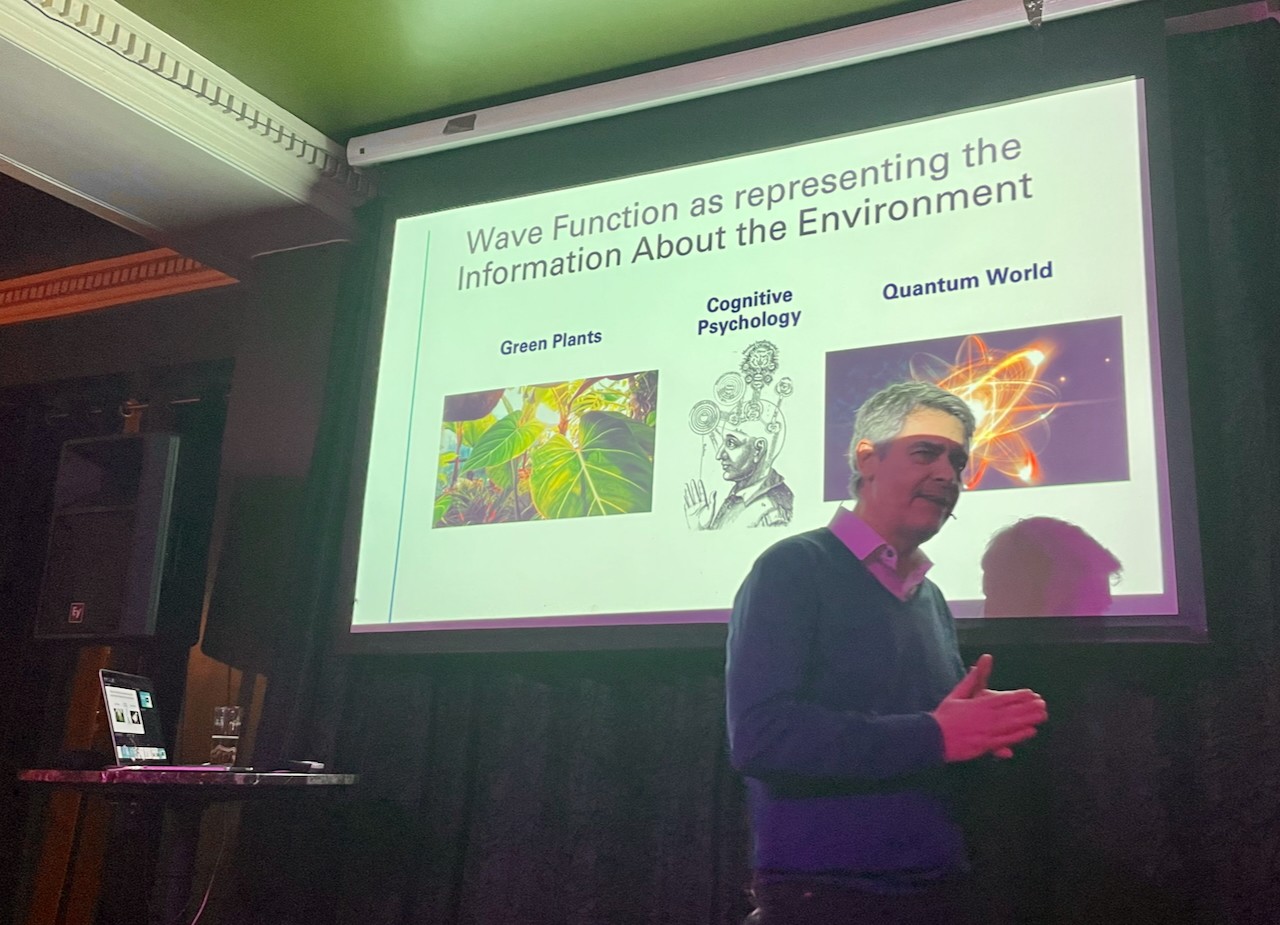
My question was: why would the maths for describing subatomic particles have any bearing on human behaviour? After all, decision making and cognitive psychology are many levels removed from particles. Is it just a chance resemblance? If not, what is it telling us?
Everyone would love to know, but no-one has an answer for this yet.
The importance of all this is signalled in an article from The Conversation (19 January 2024):
If our behaviour is best described by the way probability works in quantum mechanics, then to accurately replicate human behaviour in machines, AI systems should probably follow quantum rules, not classical ones.