
It’s good to know your limits, and I met them hard the other week at an event on cell therapies, CAR-T, and gene therapies.
It’s an exciting area for personalised treatment. It could involve taking a cell, reprogramming the genome, and popping it back in. Doing that, you’ve perhaps taught your cells how to fight a cancer, or fixed a problem with a protein.
There were a couple of things I could grasp.
First, there was a patient on a panel talking with clinicians about her experience. This is someone who had suffered with an autoimmune problem for decades. The treatment rebooted part of her immune system by wiping out B-cells. When the B-cells regenerate, they are new and no longer acting up. A miracle cure for the patient. A “one and done” treatment.
There were a few examples of this immune system reboot during the day. It’s a thing.
The other message that came through was the economics. Treating a single patient with these therapies isn’t cheap.
In principle, the savings from lifetime care costs outweigh the price of the treatment (the trick is moving to “value-based reimbursement”).
For now, it’s a problem:
in the last two years, six gene therapy products have been dropped by commercial manufacturers for these non-medical reasons, leaving no way for patients to access life-saving treatments.
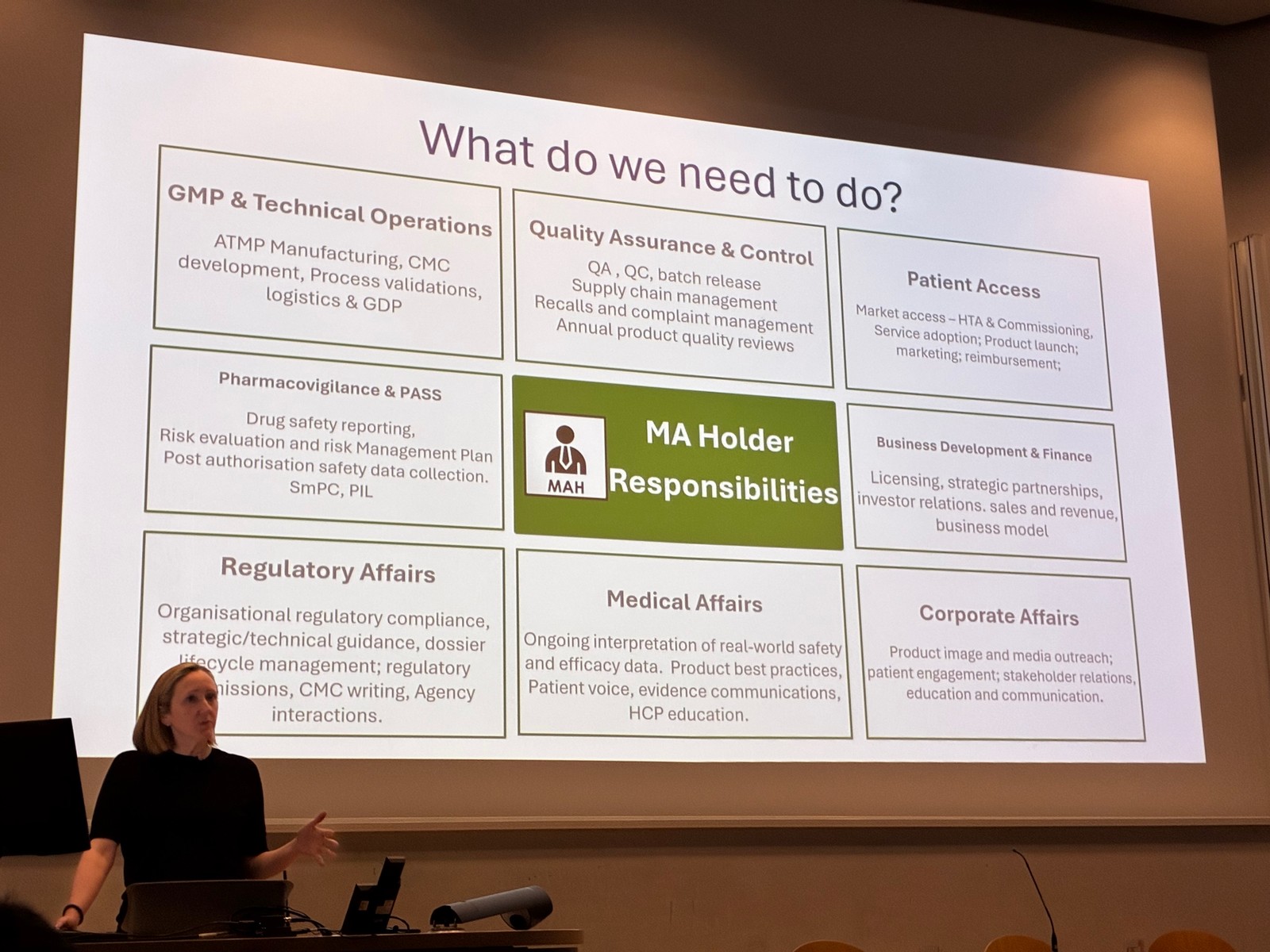
UCL and GOSH and others are taking on the whole end-to-end process. Not just research, but marketing authorisation, manufacturing, regulatory… all in an academic/hospital environment. They are setting up a repeatable pattern of pre-clinical work, delivery, manufacture, and protocols to “cookie-cutter” a gene therapy.
Lots I didn’t understand, but the bits I could were astonishing.