The main takeaway from the lecture was: your immune system doesn't work as well as you age, and you should do some more exercise. But you knew that already.
What I loved about this lecture was the description of the biological systems involved, especially how our body handles bacterial infections with neutrophil migration.
According to my likely out-of-date copy of a biology textbook, neutrophils are types of white blood cells that ingest pathogens, like bacteria. Apparently, they normally account for ~60% of white blood cells, and they can move up to 1000x faster than other cells.
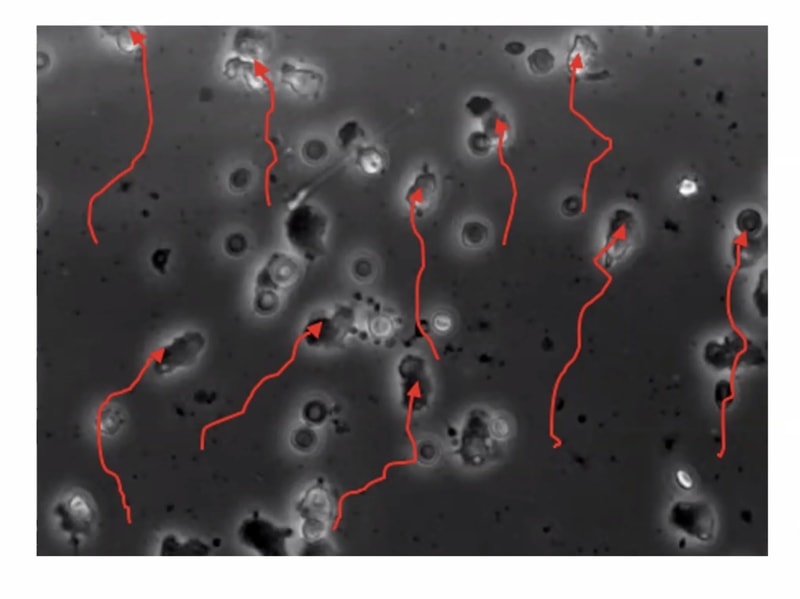
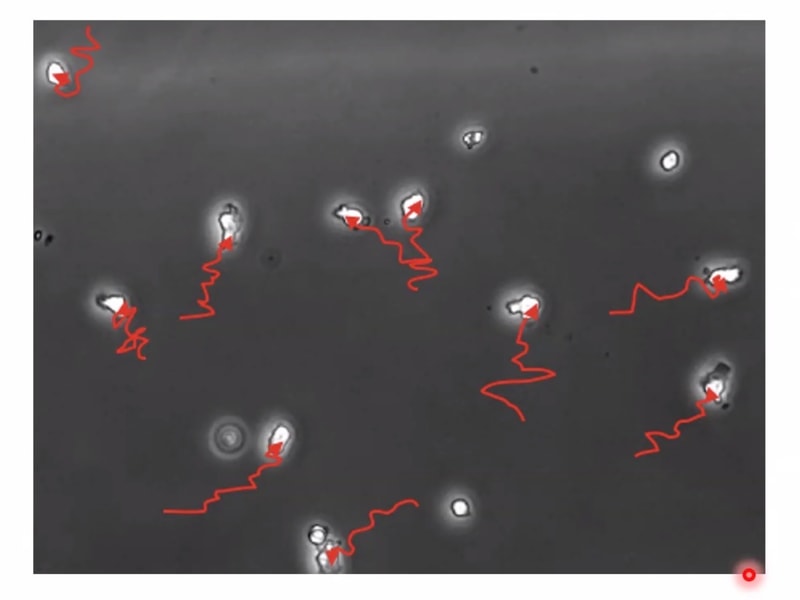
Here's a recording from UC San Francisco of Neutrophils (single cells, remember) roaming and chasing bacteria. At least 10x real-time speed, I believe: https://www.youtube.com/watch?v=V61n8a6dpOo In the young, these cells move fast and directly towards a pathogen (towards the top of the screen in these slides edited from the presentation). In the older subjects, it's not a pretty picture:
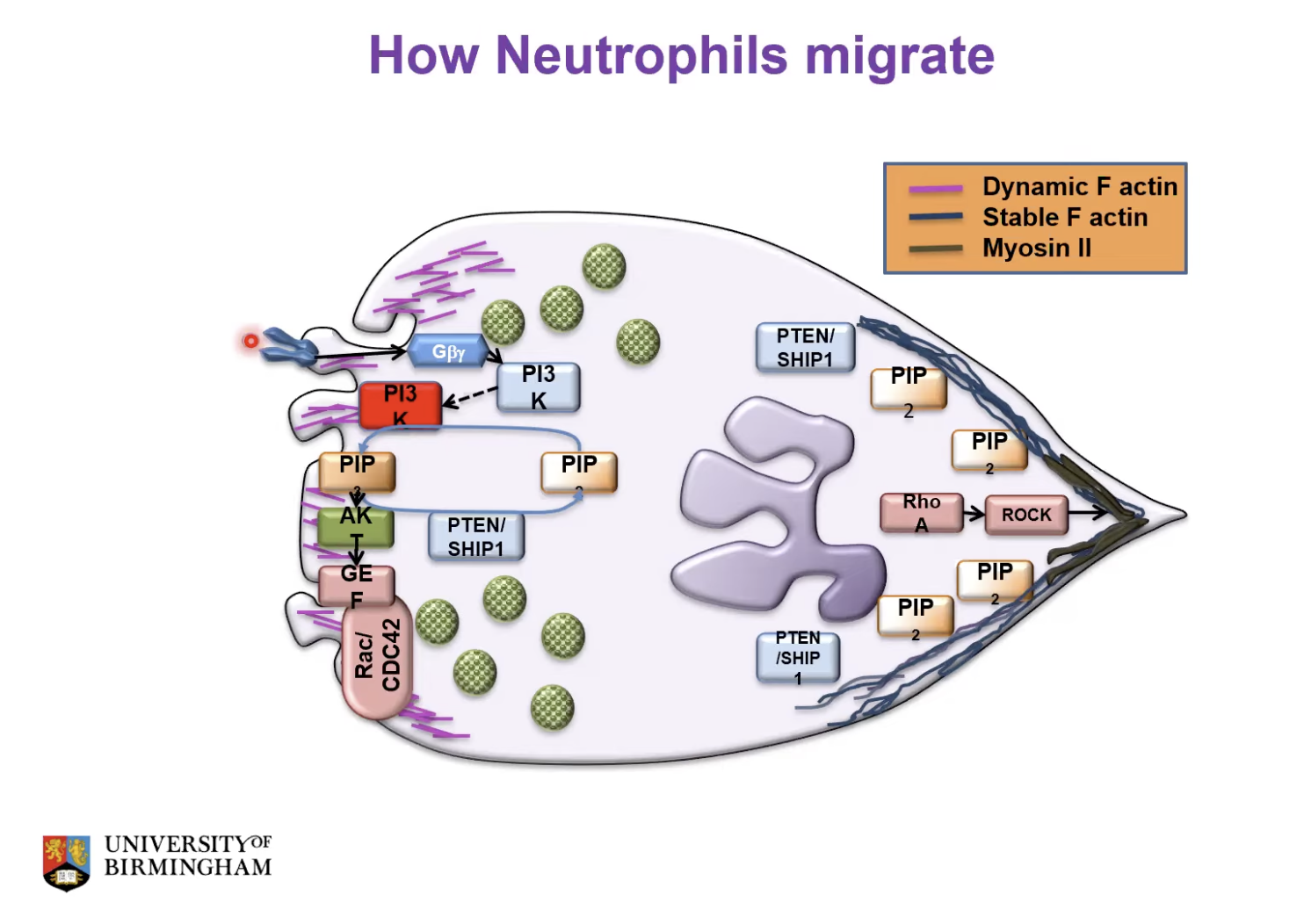
The super interesting part of all this is the system of signalling in the cell that achieves this, and what we know about them.
The details I don't understand, but we're looking at a system diagram, showing a signal being sensed on the left, triggering a sequence of messages that results in the cell moving:
Slide from Professor Janet Lord's presentation
Presumably in older subjects, the signal is being blocked. But no, it was that there was continuous activation of the pathway, and blocking part of the message flow (reducing the constant signal) restored the movement of the neutrophil.
—
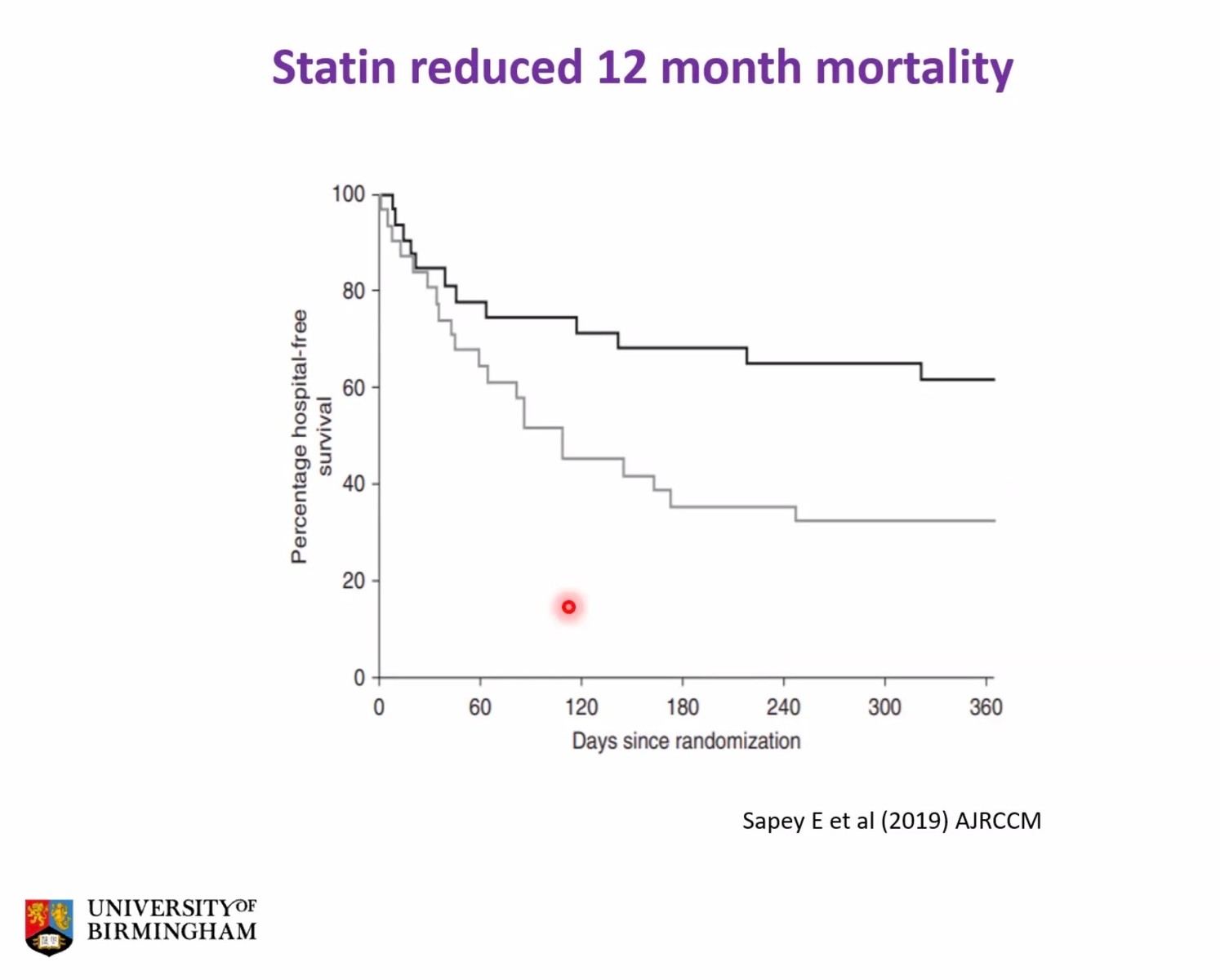
What I like here is the ability to lay out a system, study it, and find places to poke. In this case, there are existing drugs that can be poked in to help: statins.