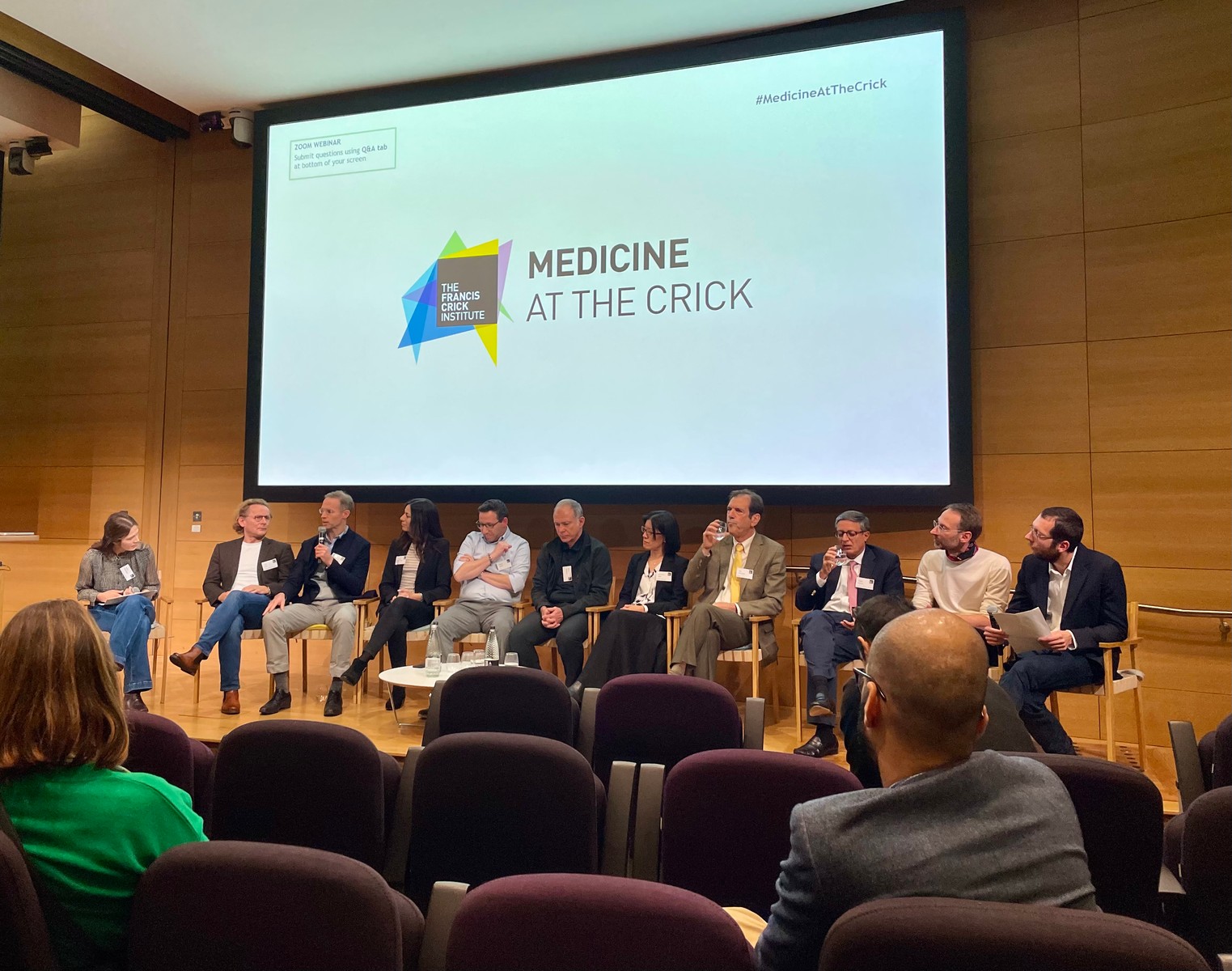
The two main kinds of drug discovery projects I’m familiar-ish with are small molecules (e.g., oral drugs) and antibodies. There are others, and proximity therapeutics is one I know nothing of. I know a bit more now, after attending a one-day single-track conference on this topic at The Francis Crick Institute on Monday.
The basics I took away are that there are two main tricks:
- “Molecular Glue”: A small molecule that can adjust the surface of a target protein in such a way that another protein can wedge itself in.
- “Heterobifunctional conjugates”: a small molecule that binds to a target protein on one end of the molecule, and also to another protein at the other end, so bringing the two proteins into close proximity.
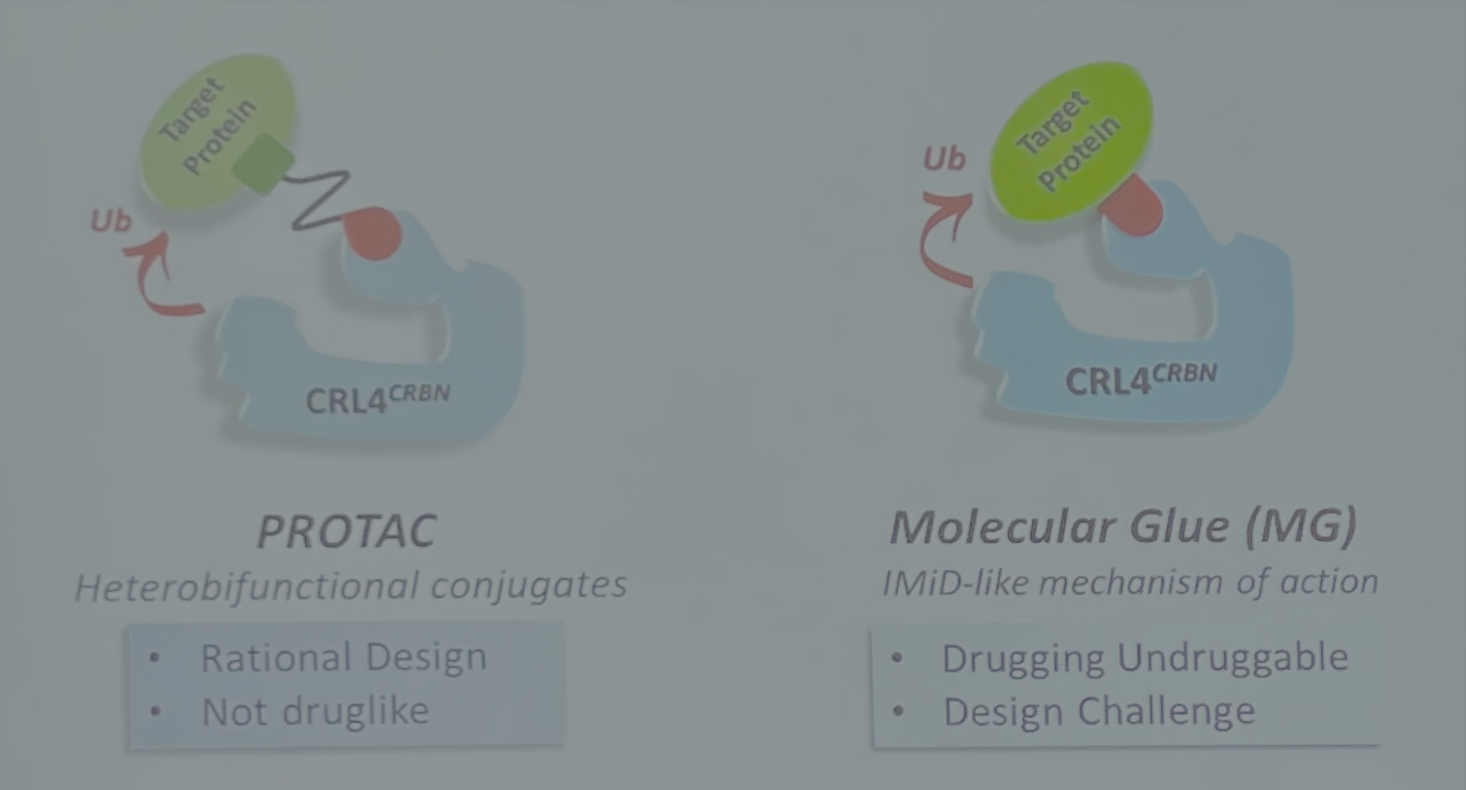
So what? When the target and other protein are close together, there can be a change on the target. The most common example talked about is degrading the target protein. In other words, getting rid of (or reducing the concentration) of something you want gone.
This is happening inside a cell, and can potentially impact “undruggable” proteins, such as transcription factors. That would mean being able to modify which proteins are produced by a cell, with implications for cancer among other diseases.
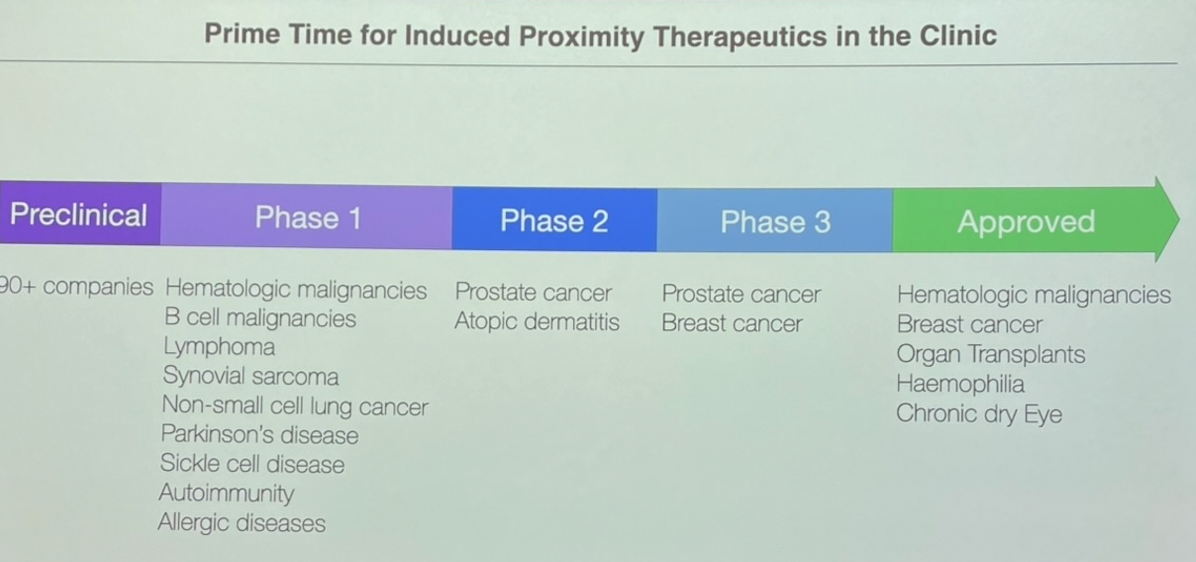
Indeed, many of the talks were about cancer or neurodegeneration. But metabolic (diabetes), inflammation and aging were all mentioned, along with (fixing) T-cell exhaustion.
I was there mainly for “what the hell is this stuff?” but also to learn how you go about computationally finding these things, and there were a couple of sessions on that, and plenty of people at the coffee break interested in that aspect.
Lovely place, friendly group of people, patient to deal with idiot questions (hi!) and I learned a lot.