Reading How to kill the ‘zombie’ cells that make you age, Nature, 15 May 2024.
Lurking throughout your body, from your liver to your brain, are zombie-like entities known as senescent cells. They no longer divide or function as they once did, yet they resist death and spew out a noxious brew of biological signals that can slow cognition, increase frailty and weaken the immune system. Worst of all, their numbers increase as you age.
This is a handy news feature discussing senescent cells, the history of discovery, and their role in ageing.
Researchers eventually discovered that senescent cells were avoiding apoptosis [programmed cell death] so they could perform a service, belching out a potent mix of inflammatory signals — including the cytokines interleukin-6 and interferon-γ — that prompt the immune system to clear out damaged cells. This helps to make room for damaged tissues to regenerate and repair.
Which is good. Until we age and the immune system can’t keep up, leading to an excess of always-on inflammation: “[…] an accumulation of senescent cells and age-related inflammation correlates with many diseases, including osteoporosis, diabetes, heart disease, kidney disease and Alzheimer’s disease.”
(There’s more on the immune system and ageing in a post from yesterday.)
Strategies to fix this situation include developing senolytics (“drugs that stop senescent cells from resisting apoptosis”), improving immune response, and gene therapy. That’s the future, but by coincidence I’m listening to a Zoe podcast with the scary but actionable title of Inflammation could age you, unless you eat these foods!
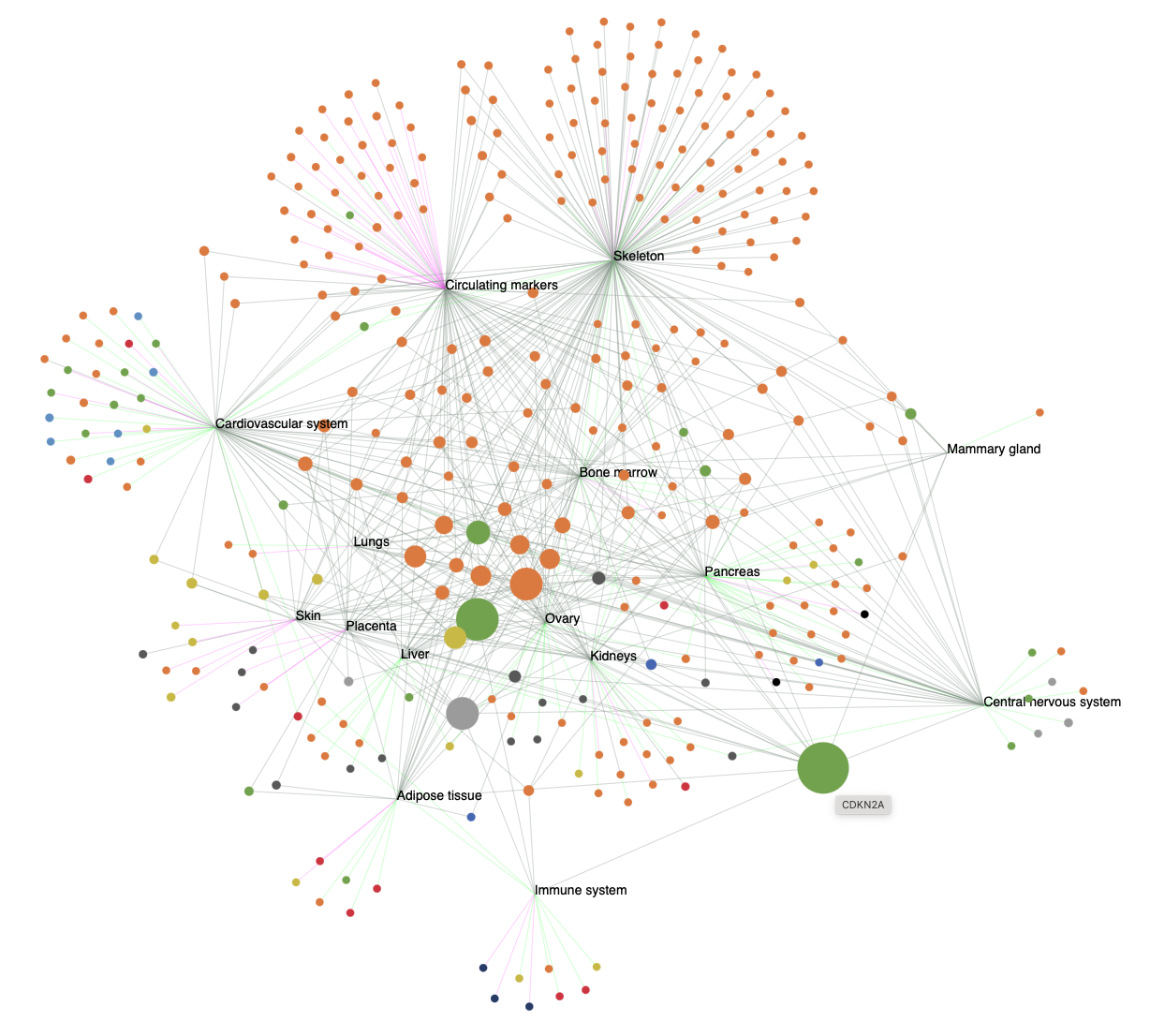
One of the problems of targeting these cells with drugs or therapies is that there are different types, and no-one knows what markers they expose. For example, in senescent cells there’s a high concentration of the proteins p16 and p53. That’s probably not specific enough, and the hunt is on for more markers, via the Cellular Senescence Network (SenNet).
I just checked, and they have a list of over 700 (across different organisms, mice and humans mostly. So that should keep everyone busy.