And for 90 per cent of symptoms, you’re better off with a dog than a doctor. […] The trick is to spot the 10 per cent that can’t be licked better. (p. 274)
Links from Staying Alive: How to get the best from the NHS from Phil Hammond (2015).
The book sprinkles links throughout the text. I didn’t think I’d be able to find them again, so here are the ones I’ve found most interesting. Descriptions are my own mis-interpretations, and these are mainly for England (there are some different sites for Wales and Scotland):
The NHS supplies the treatments recommended by NICE. The pathways section of the NICE website is an interactive guide to the handling of a condition, including quality statements, support, diagnosis.
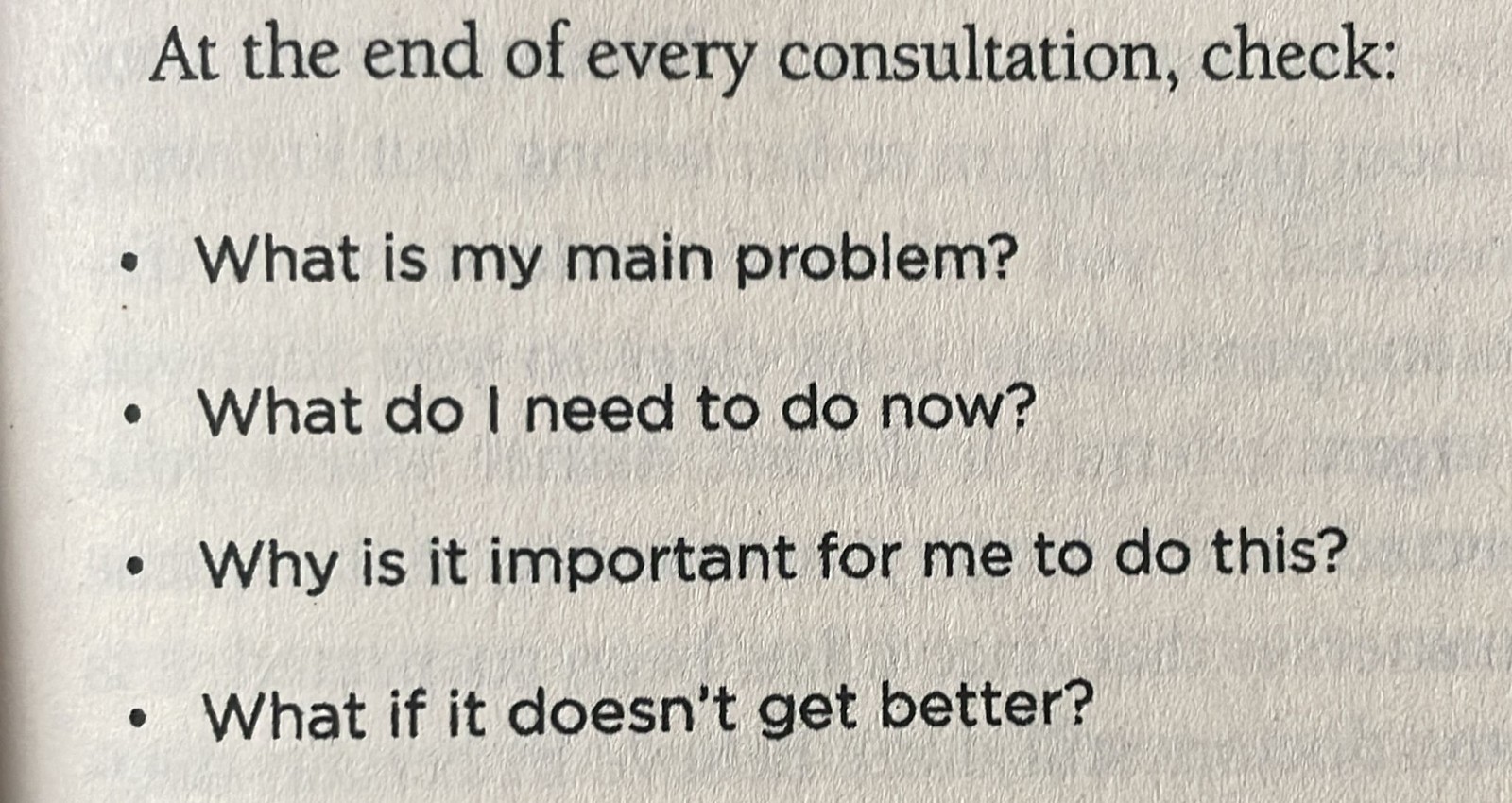
The last chapter (“Further CLANGing”, p. 274 onwards) does bring many of the links and book recommendations together, under various headings and descriptions. That’s the place to jump into if you’re in a hurry, and a reminder of questions to ask during a consultation (p. 279+).
The short reminder from the book about what to check at the end of a consultation.
The longer version of the above:
Arrive in good time for your appointment. If you're anxious, breathe deeply and slowly, and concentrate on the air going in and out of your lungs.
Ask three good questions, e.g.:
'What else could it be?', 'How would I know?' and What should I do if it doesn't get better?
What is my main problem?, 'What do I need to do now?' and Why is it important for me to do this?'
'What are my options?', 'What are the pros and cons of each option?' and 'How do I get support to help me make a decision that is right for me?'
Usually you have time to mull over a complicated choice, share it with friends and family and do some research. Don't rush it. And always ask "What is most likely to happen if we just watch and wait?'
Take notes and leave with a clear action plan and safety net (Plan B).