
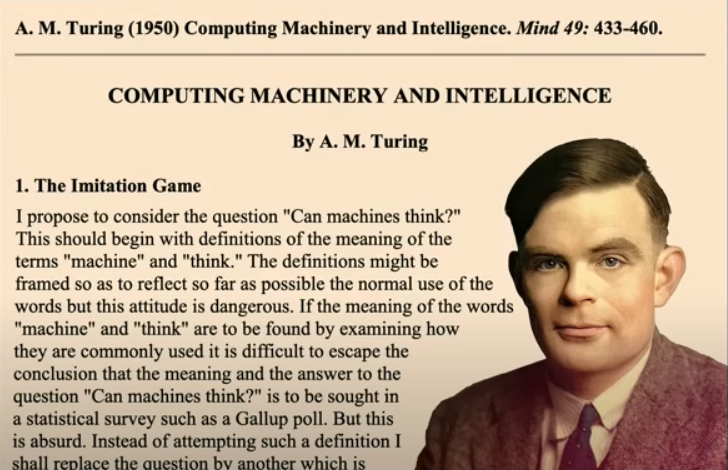
On Thursday I tuned into the Royal Society's live YouTube broadcast celebrating 75 years since the publication of what we now call the Turing Test.
Out of those five hours, I'd highlight Professor Sarah Dillon on a panel discussion (58 minutes in). She pointed out that Computing Machinery and Intelligence is "really weird", and although it introduced us to seven different variants of the Imitation Game, all that tests is that machines can imitate (the clue is in the name) and nothing more.
As Turing put it:
The original question, "Can machines think?" I believe to be too meaningless to deserve discussion.
It seems the paper was Turing's way of having a bit of fun and creating a piece of propaganda: to get mathematicians and philosophers taking computers seriously.
—
The presentations from Alan Kay (16 mins from the start) and Gary Marcus (1:39) were great value.
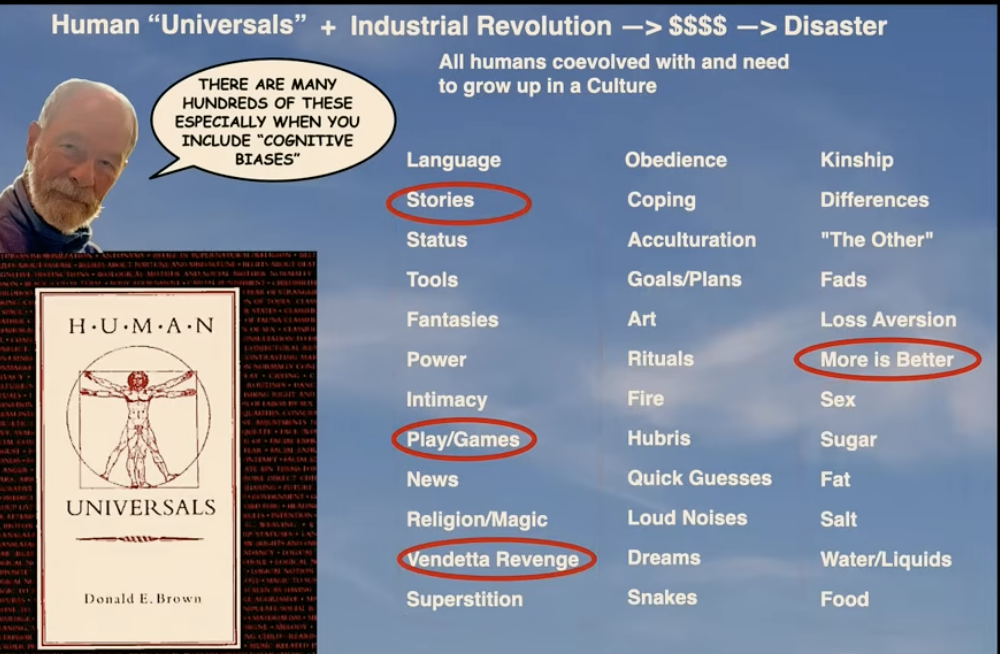
Kay pointed out we're already in deep trouble without AI, and safety should be the theme of the software industry. He referenced Donald Brown's Human Universals, which I've not seen before. It seems to be a study of all things human societies have, and I believe the suggestion is that these things we need or love combined with industry drives us to make some bad decisions. We should make more use of the "artificial superhuman intelligence" we already have: science.
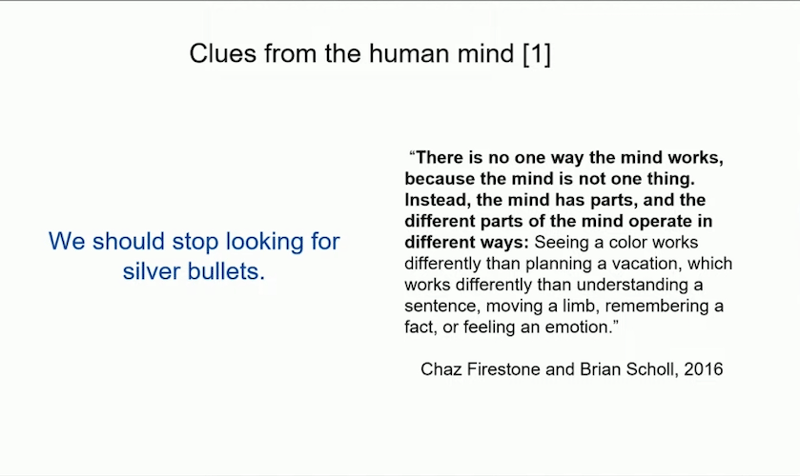
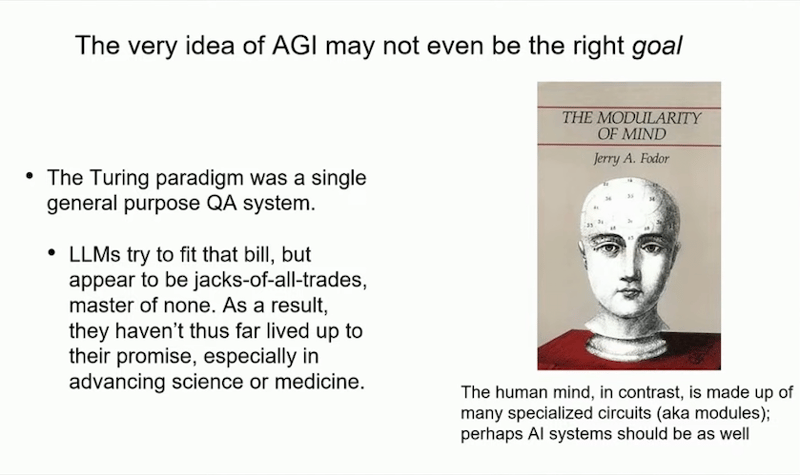
Gary Marcus—surprisingly, to me, introduced by Peter Gabriel—didn't disappoint. The craze from tech CEOs pushing for AGI via LLMs is, we're told, "bullshit". And why a single technology anyway? If we look for evidence elsewhere, we find the human mind to be modular.
—
The overall tone was that this is not the best of Turing's work, but certainly current in people's minds. Alan Kay suggested next year we should be celebrating the anniversary of his best work, The Chemical Basis of Morphogenesis.